
Minimum Wage by Province - Canada (2026)
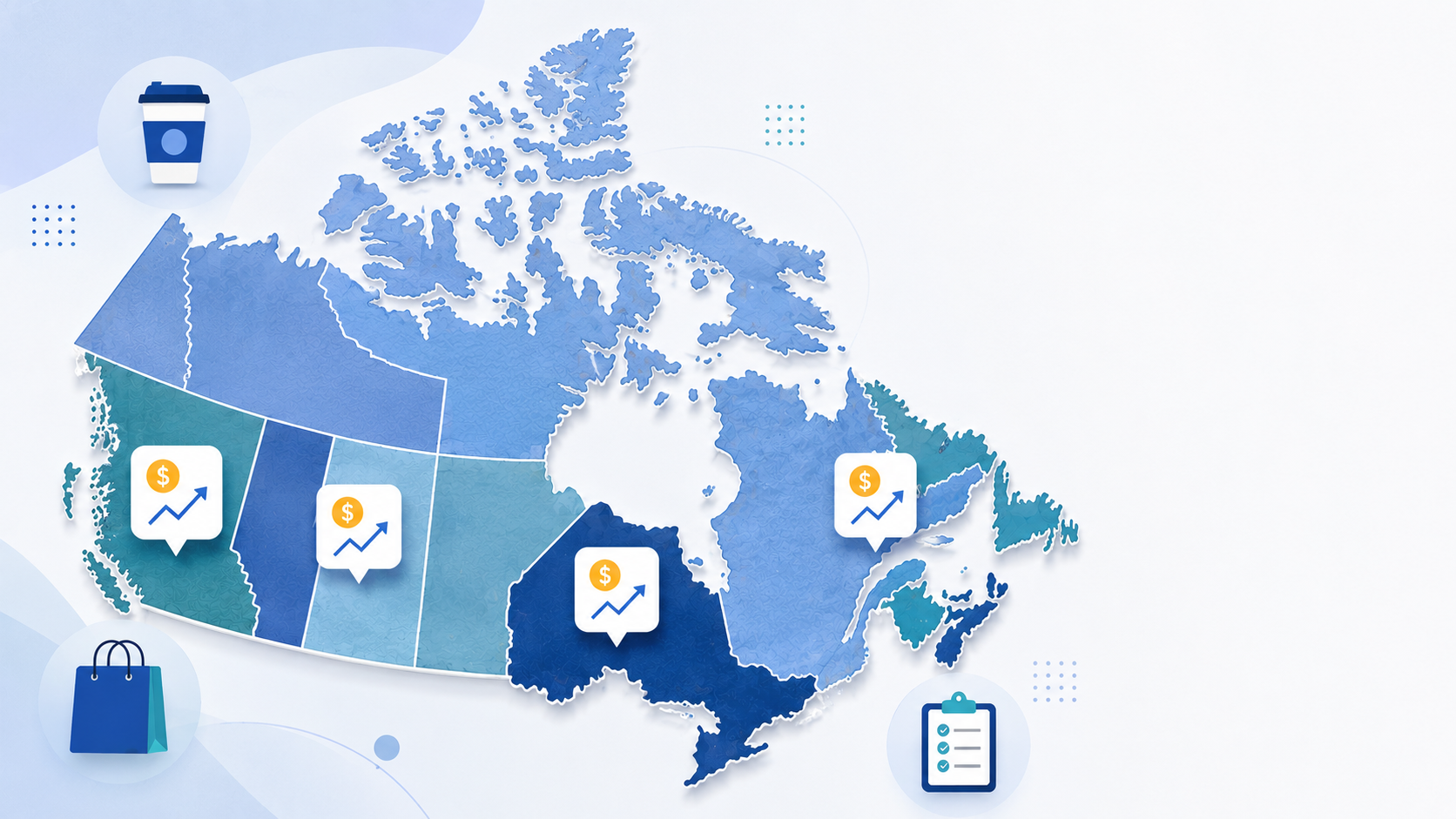
Minimum wage in Canada ranges from $15.00 per hour in Alberta to $19.75 per hour in Nunavut as of 2026, with most provinces scheduling annual increases tied to inflation. Every province sets its own general minimum wage, plus separate rates for liquor servers, students, and homeworkers in some jurisdictions. Federally regulated employers follow the Canada Labour Code rate of $18.15 per hour effective April 1, 2026.
- Nunavut has the highest minimum wage at $19.75 per hour, while Alberta has the lowest at $15.00 per hour
- Nova Scotia has two scheduled increases in 2026: $16.75 effective April 1 and $17.00 effective October 1
- Federally regulated industries follow a separate federal minimum wage of $18.15 per hour effective April 1, 2026
Minimum wage by province: Canada (2026) at a glance
The table below shows the general adult minimum wage in every Canadian jurisdiction as of 2026, along with scheduled increases. Rates are listed in Canadian dollars per hour.
| Province / Territory | Current Rate | Next Increase | Legislation |
|---|---|---|---|
| Alberta | $15.00 (Oct 1, 2018) | None announced | Employment Standards Code |
| British Columbia | $17.85 (Jun 1, 2025) | $18.25 (Jun 1, 2026) | Employment Standards Act |
| Manitoba | $16.00 (Oct 1, 2025) | $16.40 (Oct 1, 2026) | Employment Standards Code |
| New Brunswick | $15.90 (Apr 1, 2026) | Apr 1, 2027 | Employment Standards Act |
| Newfoundland and Labrador | $16.35 (Apr 1, 2026) | Apr 1, 2027 | Labour Standards Act |
| Northwest Territories | $16.95 (Sep 1, 2025) | Sep 1, 2026 | Employment Standards Act |
| Nova Scotia | $16.75 (Apr 1, 2026) | $17.00 (Oct 1, 2026) | Labour Standards Code |
| Nunavut | $19.75/hr | Sep 1, 2026 | Labour Standards Act |
| Ontario | $17.60 (Oct 1, 2025) | $17.95 (Oct 1, 2026) | Employment Standards Act, 2000 |
| Prince Edward Island | $17.00 (Apr 1, 2026) | $17.30 (Oct 1, 2026) | Employment Standards Act |
| Quebec | $16.60 (May 1, 2026) | May 1, 2027 | Act Respecting Labour Standards |
| Saskatchewan | $15.35 (Oct 1, 2025) | Oct 1, 2026 | Employment Standards Act |
| Yukon | $18.51 (Apr 1, 2026) | Apr 1, 2027 | Employment Standards Act |
| Federally regulated | $18.15 (Apr 1, 2026) | Apr 1, 2027 | Canada Labour Code |
Alberta's general minimum wage is $15.00 per hour and has remained unchanged since October 1, 2018, the lowest in Canada. Alberta does not index its minimum wage to inflation. Alberta has a separate student minimum wage of $13.00 per hour for employees under 18 working 28 hours or less per week during the school year.
Minimum wage in British Columbia (2026)
British Columbia's general minimum wage is $17.85 per hour, effective June 1, 2025, with the next increase to $18.25 per hour scheduled for June 1, 2026. BC eliminated its separate liquor server minimum wage in 2021, so servers now earn the same rate as other employees. The rate is set under the Employment Standards Act.
A Vancouver restaurant paying tipped servers must pay the full $17.85 per hour regardless of tip income, rising to $18.25 on June 1, 2026.
Minimum wage in Manitoba (2026)
Manitoba's general minimum wage is $16.00 per hour, effective October 1, 2025, with the next increase to $16.40 per hour scheduled for October 1, 2026, indexed to Manitoba's Consumer Price Index. Manitoba's rate is set under the Employment Standards Code. Manitoba does not have a separate student or training wage.
Minimum wage in New Brunswick (2026)
New Brunswick's general minimum wage is $15.90 per hour, effective April 1, 2026, with the next increase scheduled for April 1, 2027, indexed to the New Brunswick Consumer Price Index. The rate is set under the Employment Standards Act. New Brunswick does not have a separate student wage but does set a different rate for counsellors at residential summer camps.
Minimum wage in Newfoundland and Labrador (2026)
Newfoundland and Labrador's general minimum wage is $16.35 per hour, effective April 1, 2026, with the next scheduled increase on April 1, 2027, indexed to the national Consumer Price Index. The rate is set under the Labour Standards Act. The province does not have a separate liquor server or student rate.
Minimum wage in Nova Scotia (2026)
Nova Scotia's minimum wage increases twice in 2026: to $16.75 per hour effective April 1, 2026, then to $17.00 per hour effective October 1, 2026. Nova Scotia is one of only two Canadian jurisdictions with two scheduled increases in a single year. The rate is set under the Labour Standards Code.
A Halifax restaurant must update payroll on both April 1 and October 1, 2026 to remain compliant. Missing the October 1 increase by even one pay period can trigger back-pay obligations for every hour worked between October 1 and the correction date.
Minimum wage in Nunavut (2026)
Nunavut has the highest minimum wage in Canada at $19.75 per hour. The territory introduced a new annual adjustment formula in 2025, indexed to the Iqaluit Consumer Price Index and average hourly wages, with adjustments effective every September 1. The rate is set under the Labour Standards Act.
Minimum wage in Prince Edward Island (2026)
PEI's general minimum wage is $17.00 per hour, effective April 1, 2026, with the next increase to $17.30 per hour scheduled for October 1, 2026, and a further increase to $17.60 per hour scheduled for April 1, 2027. PEI maintains a twice-yearly adjustment pattern based on Employment Standards Board recommendations. The rate is set under the Employment Standards Act.
Federally regulated minimum wage in Canada (2026)
The federal minimum wage is $18.15 per hour, effective April 1, 2026, and applies to employees in federally regulated industries: banks, interprovincial and international transport, telecommunications, broadcasting, postal services, and federal Crown corporations. The rate is set under the Canada Labour Code.
The federal rate automatically applies whenever the provincial minimum wage where the employee works is lower than $18.15 per hour. A national trucking company operating in Saskatchewan must pay the federal rate of $18.15 per hour, not the Saskatchewan rate of $15.35 per hour, because trucking is federally regulated.
Worked example: calculating back pay for a missed minimum wage increase
Assume a Halifax restaurant operator missed the October 1, 2026 Nova Scotia increase from $16.75 to $17.00 per hour. A part-time server worked 32 hours per week for 6 weeks before the error was caught.
- Difference in hourly rate: $17.00 minus $16.75 equals $0.25 per hour
- Total hours worked at incorrect rate: 32 hours per week multiplied by 6 weeks equals 192 hours
- Back pay owed: 192 hours multiplied by $0.25 equals $48.00 per employee
- For a restaurant with 12 affected employees: $48.00 multiplied by 12 equals $576.00 in retroactive wages
- Plus vacation pay accrual (4% in Nova Scotia): $576.00 multiplied by 0.04 equals $23.04
- Total back-pay liability: $576.00 plus $23.04 equals $599.04
This figure does not include potential administrative penalties or interest on unpaid wages.
Special category minimum wages across Canada (2026)
Several provinces maintain separate minimum wage rates for specific worker categories beyond the general adult rate. Liquor servers: Quebec is the only province with a separate tipped employee rate at $13.30 per hour, effective May 1, 2026. Students under 18: Alberta ($13.00 per hour) and Ontario ($16.60 per hour, rising to $16.90 on October 1, 2026) maintain separate student rates. Homeworkers: Ontario sets a separate homeworker rate of $19.35 per hour, rising to $19.70 per hour effective October 1, 2026.
Frequently asked questions about minimum wage in Canada
There is no single national minimum wage in Canada. Each province and territory sets its own rate, and federally regulated industries follow a separate federal rate. In 2026, provincial rates range from $15.00 per hour in Alberta to $19.75 per hour in Nunavut. The federal minimum wage is $18.15 per hour effective April 1, 2026.
Nunavut has the highest minimum wage in Canada at $19.75 per hour. Yukon follows at $18.51 per hour effective April 1, 2026. Among provinces, British Columbia at $18.25 per hour effective June 1, 2026, and Ontario at $17.95 per hour effective October 1, 2026, are the highest.
Alberta has the lowest minimum wage in Canada at $15.00 per hour, unchanged since October 1, 2018. Saskatchewan was previously tied with Alberta but increased to $15.35 per hour effective October 1, 2025.
Nova Scotia has two minimum wage increases scheduled in 2026: from $16.50 to $16.75 per hour effective April 1, 2026, and from $16.75 to $17.00 per hour effective October 1, 2026. Employers must update payroll on both dates.
The federal minimum wage is $18.15 per hour effective April 1, 2026. It applies to employees in federally regulated industries including banking, telecommunications, interprovincial and international transport, broadcasting, and federal Crown corporations.
Quebec is the only Canadian jurisdiction with a separate tipped employee minimum wage, set at $13.30 per hour effective May 1, 2026. All other provinces and territories require employers to pay the full general minimum wage to tipped employees regardless of tip income.
Yes. Ontario's student minimum wage is $16.60 per hour, rising to $16.90 per hour effective October 1, 2026. It applies to students under 18 who work 28 hours or less per week when school is in session, or any hours during school breaks.
Most Canadian provinces now index their minimum wage to the Consumer Price Index and adjust annually, typically on April 1, May 1, June 1, September 1, or October 1 depending on the province. Alberta is the only province without scheduled increases.
Employers who pay below the applicable minimum wage owe back pay for every affected hour, plus any associated vacation pay accrual. Provincial employment standards authorities can also impose administrative penalties and interest on unpaid wages.
Jana Reserva
Ready to get started with Tanda?




Keep compliance top of mind with workplace resources
Get the latest tools and articles sent straight to your inbox